
SASSA Child Grant – Eligibility & Required Documents
Raising a child comes with a massive financial responsibility. When stable jobs become harder to find, providing children with proper meals and care is a serious challenge for many families.
As a means to relieve such pressures, SASSA has instituted the child support grant. This is a grant system introduced with the sole purpose of helping parents and guardians raise their children amidst economic challenges.
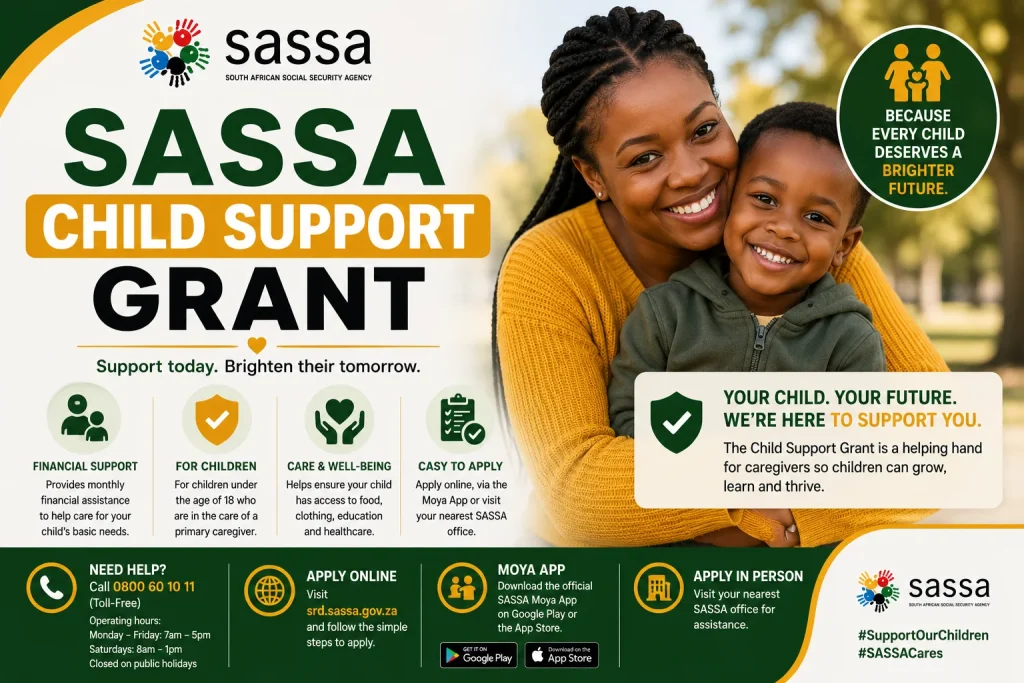
The Child Grant offered by SASSA offers financial assistance each month that can help you deal with your expenses more effectively. The information below describes what the child grant entails, what type of people qualify for this benefit, and how to apply successfully.
Eligibility Criteria for SASSA Child Support Grant
Before you get your files together and go to the local office, you must check if your family matches the official rules. The government uses these rules to make sure the monthly cash goes to the children who need it most. By reading this set of rules at home, you can save time and avoid being denied entry to the office.
- You have to be the primary caregiver for the child.
- You and the child must live in South Africa all the time.
- You must have a South African ID book, a permanent resident card, or refugee papers.
- The child must be under 18 years old to get the monthly money.
- Children living in government care homes cannot get this grant money.
- If you are a single parent, you must earn less than R61,200 per year after tax.
- If you are married, you and your partner must earn less than R122,400 per year together.
- You can only get the monthly money for up to six children who are not your birth kids.
Required Documents for Application for SASSA Child Grant
When you see that you match the rules, you need to collect your files to show your situation to the government. The importance of bringing the correct documentation cannot be overstated since a lack of it. The extra effort of checking your documents before leaving for the office ensures a quicker trip.
- Your original 13-digit green ID book or your new smart ID card.
- The official birth certificate of the child shows an ID number.
- Earnings proof, such as your last three payslips or recent statements of your bank account.
- A letter from a police station or a school principal if you take care of a child who is not your birth kid.
- Your marriage certificate, if you are legally married.
- A divorce paper from the court if you are divorced and take care of the child alone.
- A death certificate if the birth parents of the child have passed away.
- A blue unemployment card or a letter from your old boss if you lost your job.
Step-by-Step Guide to Apply for SASSA Child Grant
With your files ready in a folder, you can finish your application. You can remember that applying does not cost any money, so never pay anyone who says they can help you for a fee. Following these steps at the office makes sure everything goes well.
- Go to Your Local Office: You can go to the closest SASSA office or a help spot in your area.
- Fill Out the Forms: Complete the application forms while you sit with the office worker.
- Hand Over Your Files: Give your original files and clean copies to the worker so they can check them.
- Get Your Receipt: Take a stamped paper receipt from the worker. This is your proof that you applied.
- Wait for the Answer: The office takes up to three months to check everything, but your first pay will include money from the day you applied.
Final Words
Getting the Child Support Grant can bring great relief to a home that needs help. Since the program provides continuous support each month, it ensures that your kids get what they require. Because the application takes time and needs many files, it is best to start early. Preparing well ensures your family gets financial help without facing problems.